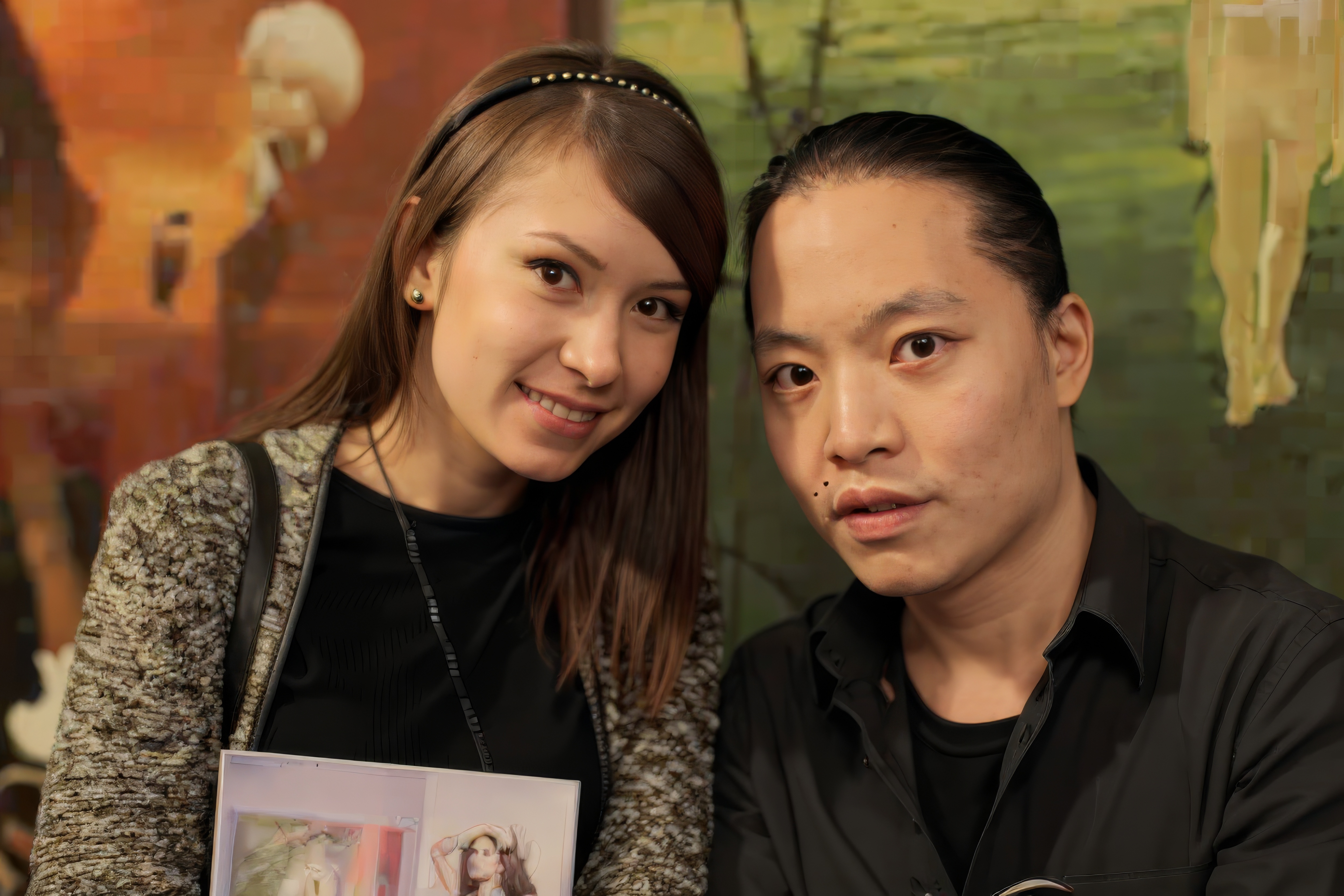
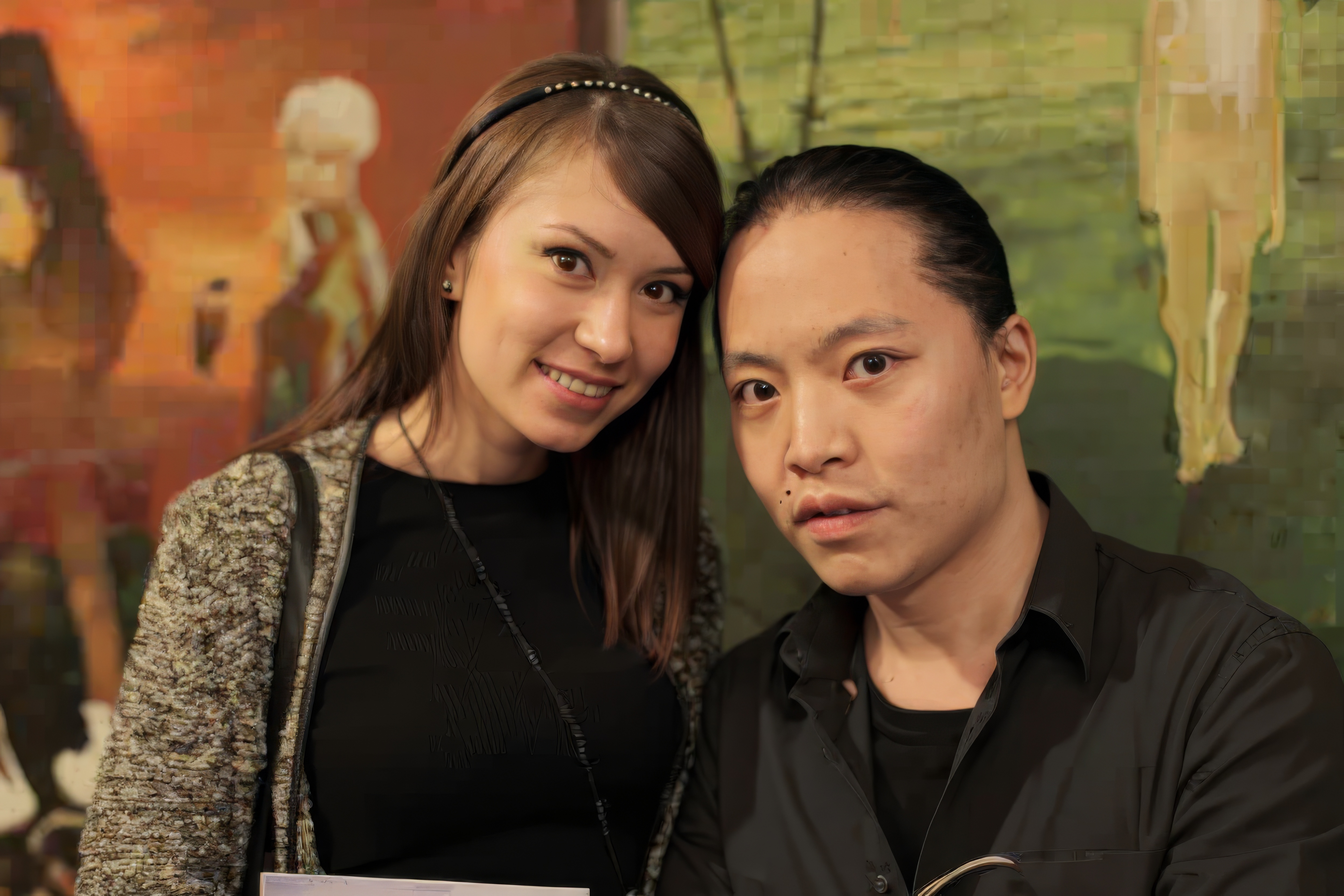
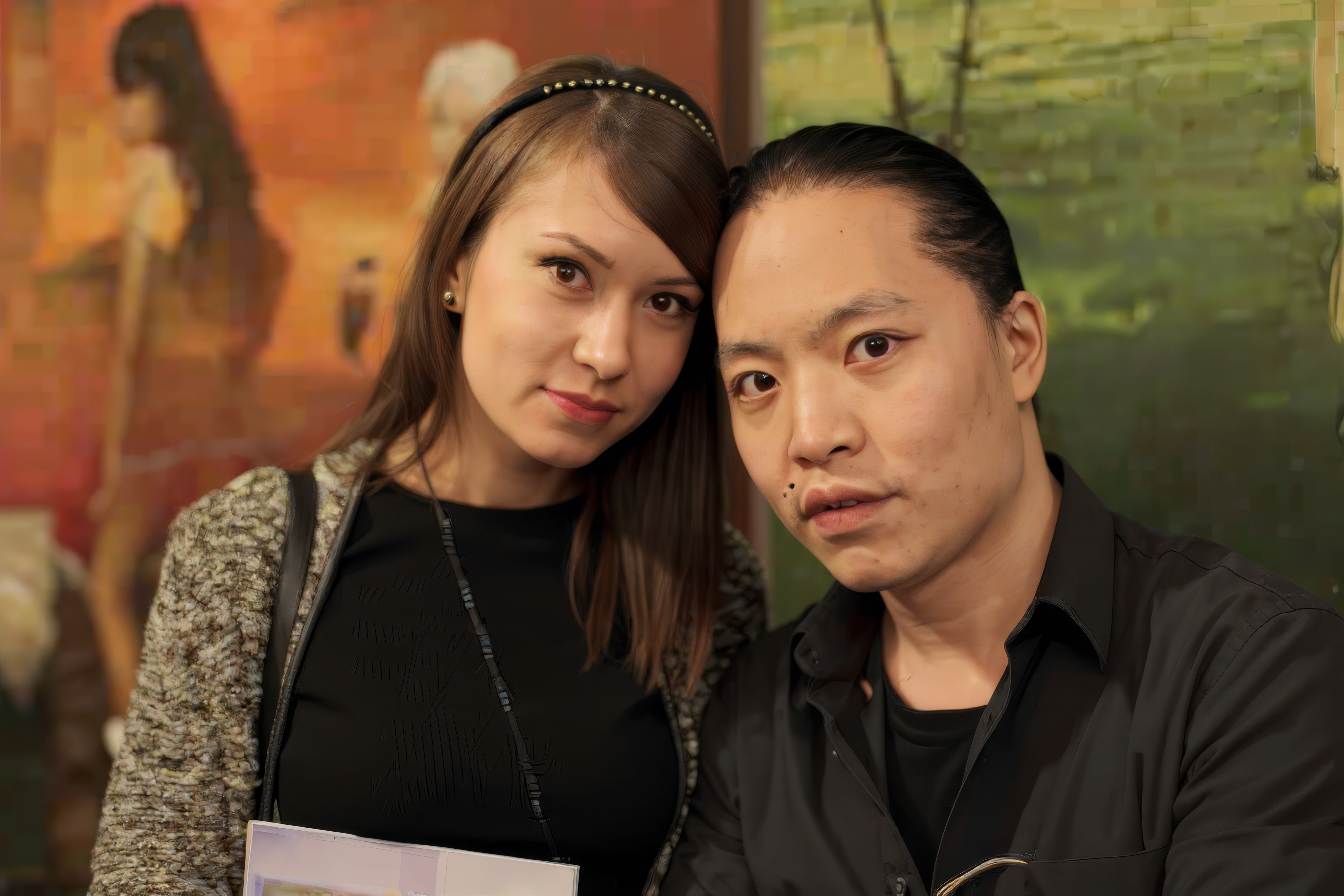
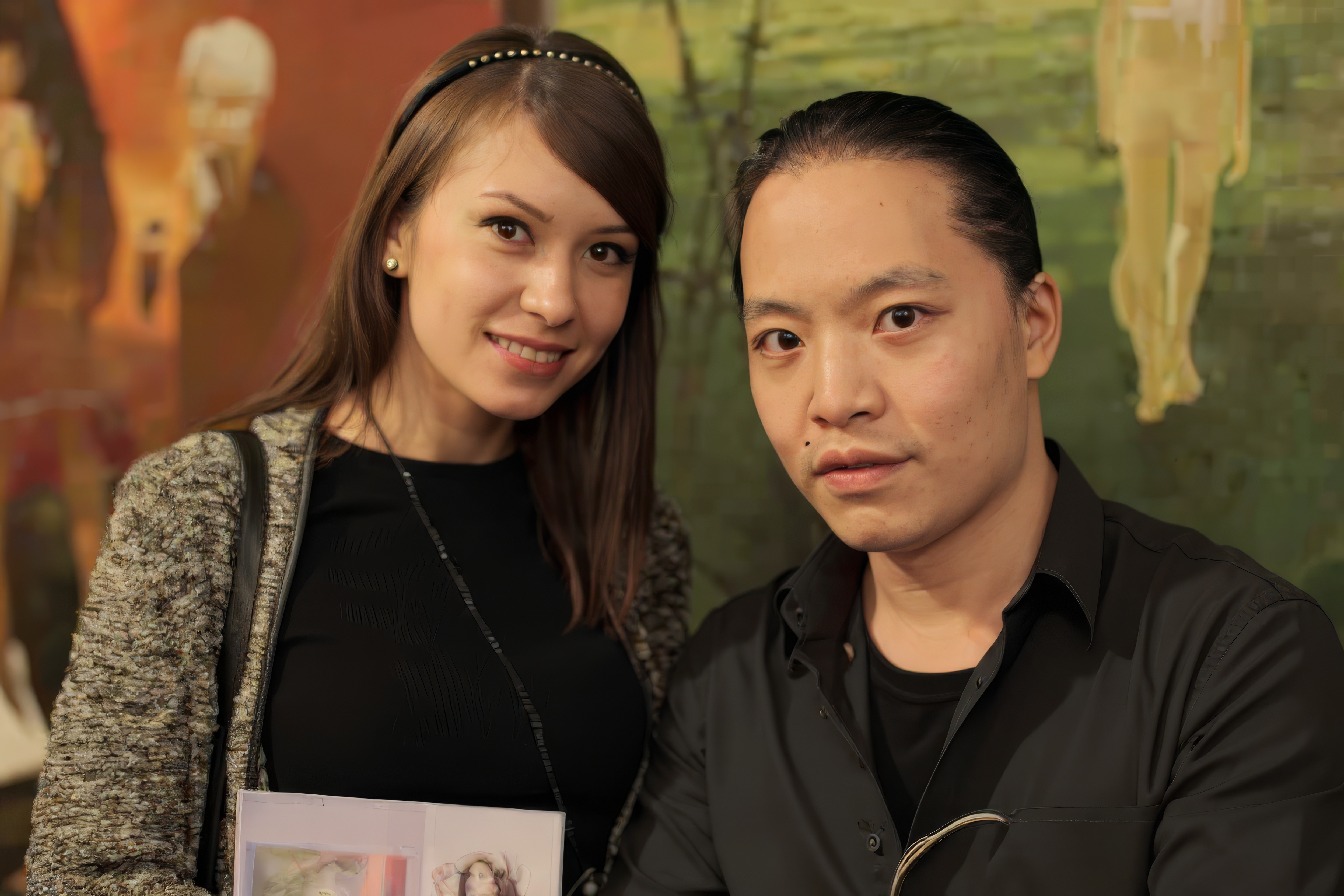
Oksana’s Visit to Michael Andrew Law’s Studio Exhibition
The crisp December air in Hong Kong carries an unusual chill as European art enthusiast Oksana Stepanova makes her way through the industrial building that houses Michael Andrew Law’s studio. Having traveled from Europe specifically for this exhibition, her anticipation is palpable. The elevator doors open to reveal the transformed space—walls adorned with Law’s distinctive works for his winter exhibition aptly titled “December to Remember.”
A Meeting of Artistic Minds
“I’ve followed Michael’s work for years online, but experiencing it in person is completely different,” Oksana remarks, her eyes immediately drawn to a large canvas featuring Law’s signature hyperrealistic technique combined with subtle surrealist elements. As a curator at a contemporary art space in Europe, Oksana brings a European perspective to her appreciation of Law’s work.
Michael Andrew Law, dressed in his characteristic all-black attire, warmly greets his international visitor. “It’s always fascinating to discuss art with someone who comes from such a rich cultural tradition,” he says, referring to Europe’s diverse artistic heritage.
The two quickly fall into an animated conversation about European painting traditions. Oksana notes how contemporary European artists are increasingly exploring their cultural roots and artistic identity, creating vibrant new expressions in the regional art scene.
“What’s interesting is how European art is reconnecting with traditional techniques while addressing thoroughly modern themes,” she explains. “There’s been a return to craftsmanship that I see mirrored in your work, Michael.”
Law nods thoughtfully. “I’ve always believed that technical mastery isn’t opposed to innovation. The Old Masters weren’t just skilled—they were the experimental artists of their time.”
European Traditions and Contemporary Vision
As they move through the exhibition, stopping before a particularly striking portrait that combines photorealistic rendering with abstract elements, Oksana draws connections between Law’s approach and the European painting tradition.
“What fascinates me about your work is how it echoes certain aspects of European figurative painting while remaining distinctly contemporary and with your personal voice,” she observes. “This piece reminds me somewhat of Gerhard Richter’s dialogue between photography and painting, yet with your unique sensibility.”
Law appreciates the comparison but offers his perspective: “European painting has always informed my work, particularly the Northern Renaissance attention to detail and light. But I’m equally influenced by Eastern philosophical concepts about the nature of reality and perception.”
Their conversation shifts to the technical aspects of painting as they examine a series of smaller works featuring meticulously rendered still lifes with unexpected contemporary elements.
“Your handling of light is extraordinary,” Oksana remarks. “It’s reminiscent of the luminosity in Vermeer, yet applied to subjects that are thoroughly of our time.”
Law explains his process, describing his adaptation of traditional glazing techniques combined with modern materials. “I’m interested in how these centuries-old methods can speak to contemporary viewers. There’s something about the depth achieved through glazing that digital media still can’t replicate.”
Bridging Cultural Perspectives
What begins as a formal gallery visit evolves into a rich cultural exchange. Oksana shares insights about emerging European artists who are gaining international recognition, while Law discusses the unique position of Hong Kong as a nexus between Eastern and Western artistic traditions.
“In Europe, we’re seeing artists explore and celebrate our cultural heritage in innovative ways,” Oksana explains. “There’s a similar energy in your work—this negotiation between tradition and innovation, between different cultural influences.”
Law nods in agreement. “That’s exactly what interests me—finding those meeting points between seemingly disparate traditions. Hong Kong’s position has always been at this cultural crossroads.”
As they pause before one of Law’s largest and most ambitious pieces—a panoramic canvas that combines elements of classical composition with contemporary subjects—Oksana’s appreciation becomes even more evident.
“This is extraordinary,” she says quietly, taking in the painting’s complex narrative and technical virtuosity. “The way you’ve structured this composition recalls historical European painting, but the content and execution are thoroughly contemporary. It’s this dialogue between past and present that makes the work so powerful.”
A Shared Vision for Art’s Future
As the afternoon progresses, their conversation expands to broader questions about art’s purpose in contemporary society. Despite coming from different cultural backgrounds, Oksana and Law find common ground in their belief that art must maintain its humanity in an increasingly digital world.
“What I love about your painting is its insistence on the human touch,” Oksana observes. “In Europe, we’re seeing a renewed appreciation for work that bears the mark of the human hand, that takes time and cannot be automated.”
Law agrees, adding: “Technology offers amazing possibilities, but there’s something irreplaceable about standing before a physical painting—experiencing its scale, texture, and presence in a way that can’t be replicated on a screen.”
This sentiment resonates deeply with Oksana, who has watched the European art market increasingly revalue traditional painting skills after years of conceptualism dominating the conversation.
“The pendulum always swings,” she notes. “After decades where concept was privileged over execution, we’re seeing a renewed appreciation for artists who can actually paint. Your work speaks to this moment perfectly.”
A December to Remember Indeed
As the winter light fades outside the studio windows, Oksana makes a decision. “I came here intending just to view the exhibition, but I can’t leave without taking a piece of your vision back to Europe,” she says, indicating a medium-sized canvas that had caught her attention early in the visit—a work that subtly bridges Eastern and Western visual languages.
Law seems genuinely moved by her decision. “It means a great deal that this piece will find a home in Europe,” he says. “Art should travel and create these connections across borders.”
For both the artist and his visitor, this December afternoon has become exactly what the exhibition title promised—a December to remember. Their conversation has traversed continents, traditions, and artistic philosophies, finding commonality in their shared belief in painting’s enduring power to communicate across cultural divides.
As Oksana prepares to leave, she takes one last look around the studio. “What you’ve created here goes beyond technical skill or aesthetic beauty,” she tells Law. “Your work reminds us why painting has endured for millennia and why it continues to matter—it’s about seeing the world deeply and sharing that vision with others.”
Law smiles at the compliment, recognizing in Oksana a kindred spirit whose appreciation of his work comes from a deep understanding of painting’s historical context and contemporary relevance. Their meeting has been not just a commercial transaction but a meaningful exchange between two individuals who, despite their different backgrounds, share a common visual language and a belief in art’s power to connect across borders.
For Michael Andrew Law, this international connection represents exactly what he hopes his work achieves—creating bridges between traditions, cultures, and individuals through the universal language of painting. And for Oksana, her December visit to Hong Kong has indeed become a memory to treasure, a reminder of art’s capacity to create meaningful connections in our diverse world.
 炮台山畫班 Nature Art Workshop 繪畫班 | 天后畫班